Effective succession planning is not simply about naming who might take over a senior role. It is about identifying potential early, understanding whether possible successors are genuinely ready, and giving them the experience and development they need before the organisation depends on them.
It's England's first game of the 2026 World Cup and like James Graham's play Dear England, the team has been changed, updated, and some might say marks the beginning of a new footballing era. I was lucky enough to catch the play on stage and can report it does an excellent job of understanding leadership change. It put Gareth Southgate’s eight years in front of the audience it deserves - however - I should declare an interest, I still play five-a-side twice a week, which keeps me suitably humble about how easy all of this looks from the sofa.
This summer, England head into a World Cup under Thomas Tuchel. To understand what he has inherited, it helps to look first at what Southgate built before him.
Like the BBC said, much of what follows leans on a dramatised portrayal, so the dressing-room scenes are better taken as informed invention rather than gospel. Even so, the ideas hold, and the broader record backs the rest: Southgate’s tenure should travel well beyond football and into leadership history.
Southgate removed the fear.
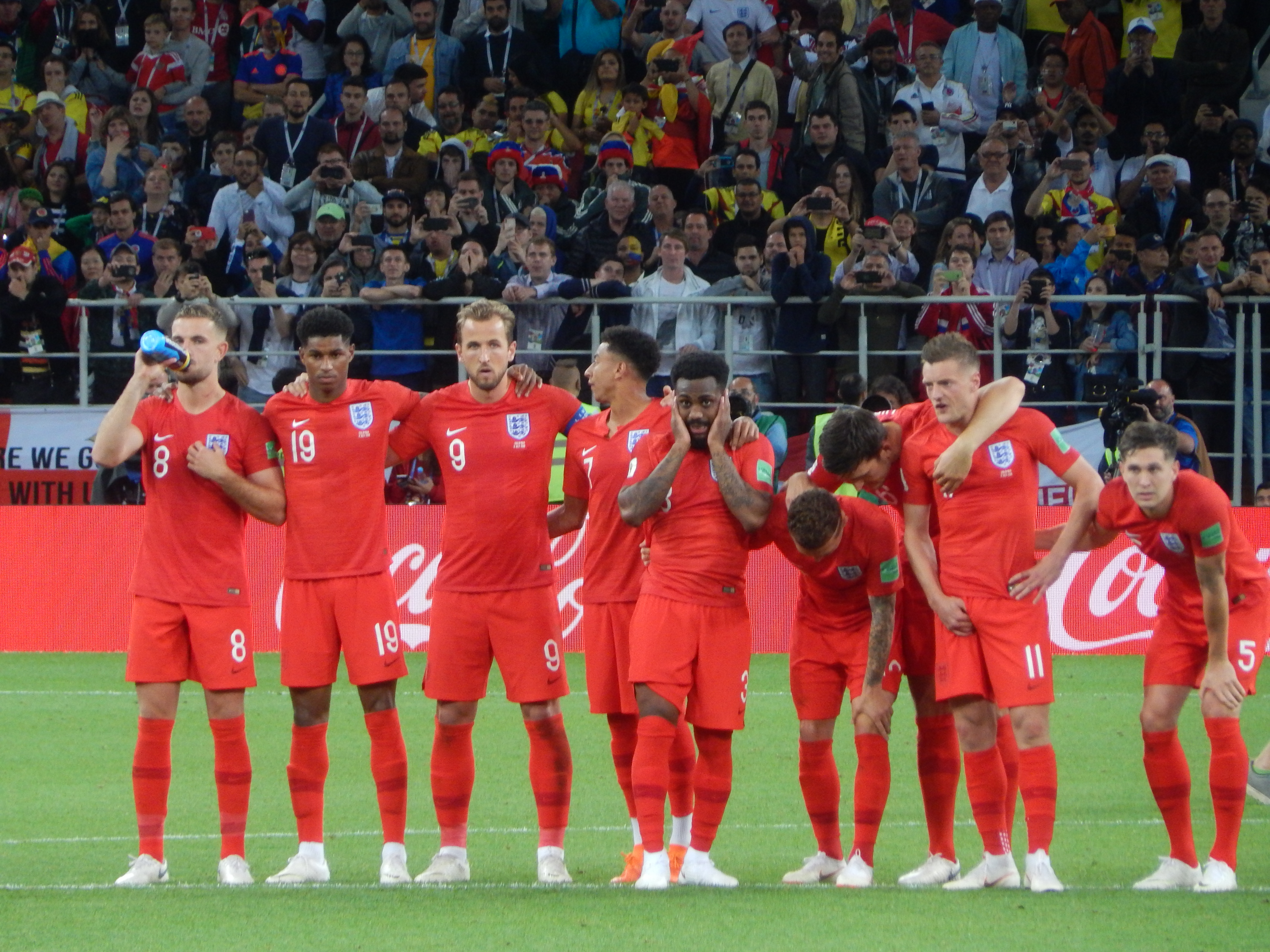
Walk into the England camp at its lowest and you would not have found a shortage of talent, but you would have found fear. Gifted players, carrying the hopes of a nation, uneasy about the one thing they had each done ten thousand times in training: taking a penalty. Southgate looked at all that ability sitting next to all that fear, and decided to tackle the fear first.
The players still practised, and the better strikers of a ball still got the nod, but his real move was to change the situation around the kick rather than deliver a stirring speech to the man taking it. The goalkeeper walked the ball to the next taker, so nobody made that long walk alone. The order was agreed in advance, so no one had to volunteer in the one second he could least afford to think. The team greeted each player the same way coming back, whether the net bulged or the ball sailed over the bar. Small structural choices, each one quietly removing a chance to come unstuck.
We are wired to pin failure on the person. “He bottled it.” “She hasn’t got the temperament.” “They’re not quite board material.” The more useful instinct, and the harder one, is to look at the circumstances first, because they shape behaviour far more reliably than character tends to. You recruit people for their judgement under pressure. The leader’s job is to build the conditions in which they keep hold of it.
He changed the story.
England carried a story that started in 1966 and sat on the shoulders of every player since, that this is a nation that wins tournaments, and is expected to. The record had stopped agreeing decades earlier, fifty years and counting without a trophy, yet the story carried on regardless. A story you cannot live up to is a heavy thing to kick around on the pitch.
The problem was never motivation, everyone in that squad desperately wanted to win, and the desperation was rather the point. A team that believes it must win every time treats every match as a referendum on its own worth, and a group busy defending its identity plays small and safe. Southgate did not crank up the ambition, he lowered the expectancy that history demanded, and placed the players at the beginning of their own story.
Every organisation has a narrative, and it is hardly ever one it sat down and chose, the market leader, the founder’s firm, the plucky disruptor. It flatters for a while, then the place spends years either defending it or falling short of it. The narrative your people are performing to may be one nobody has ever said out loud, but like England it can be the very thing holding them back.
He went first.
You cannot ask people to take their armour off while yours stays firmly bolted on. Southgate knew he had a penalty of his own to answer for, the one he took against Germany in the Euro 96 semi-final at Wembley, saved, England out. He carried the weight of it for more than twenty years, but he told the players about it before he asked a single thing of them.
None of this is about being the most popular person in the room, and it certainly isn’t a charm offensive. People take their cue from their leaders. If a leader can be honest about their own shortcomings, everyone below them can afford to be too.
This is now clearly defined as psychological safety, the sense within an organisation that you can own a mistake, disagree out loud, or ask the most simple question without it being quietly held against you. Harvard's Amy Edmondson built much of the original research around it, and Google's Project Aristotle later identified it as the strongest predictor of team effectiveness. Teams that have high psychological safety are both happier and more productive.
The man who comes next.
Notice how little of this was about talent. Southgate had much the same players as the managers before him. What he changed was the story they carried, the fear in the moments that decided matches, and the example set from the front. Two major finals came of it, no trophy, a generous helping of criticism, and in the end a departure after another final lost. Work of that kind rarely shows up cleanly in the results column, which is precisely why it gets underrated.
Tuchel is a very different animal, he arrives with none of the baggage. He is an outsider and a serial winner, with titles in Germany and France and a Champions League at Chelsea, and he is blunt in a way Southgate never was. Demanding, unsentimental, far more inclined to add pressure than to lift it.
You could see it in his World Cup squad, Foden and Palmer are among the most gifted footballers England has, he left both at home after underwhelming seasons at their clubs. A manager prepared to drop names of that wattage has made his standards perfectly clear. Qualification was flawless, eight wins from eight, and the Football Association handed him a contract to 2028 back in February, which tells you they rather like the foundations.
The order of all this is the part that matters, you could not have started this England’s journey with Tuchel. A manager that demanding, dropped into the frightened dressing room of a few years ago, would have impacted negatively, not positively on the squad. Southgate did the groundwork changing the internal narrative. Tuchel has inherited a team that can take an edge it would not have survived before.
What it adds up to.
The lesson for anyone running an organisation lives in that sequence. The reflex when a leader departs is to recruit the same again, or to lurch to something or someone surely different, when the better question is what the team needs next, and that depends entirely on what the last leader left behind. A secure culture can take a team somewhere it has never been, a fragile one simply can break it. If you get the order wrong the damage can run deeper than a wasted appointment, you quietly undo the very groundwork that would have allowed the next leader to succeed.
There is a moment near the end of Dear England where Tuchel tells Southgate, “you made the impossible possible.” From what we have seen, whether England can take the final step and bring it home this summer is no longer just a question of psychology, it is now fundamentally a question of the beautiful game.
See this in practice: Chair and CEO succession in a major healthcare organisation.